Originally published on PocketGamer.biz.
Portugal is fast becoming a notable player in the global games industry, with the region estimated to have generated around $258 million last year and being home to more than 7,000 students in areas related to games and multimedia.
That success is expected to continue to grow in the coming years, fueled by the establishment of promising new studios like One Way Eleven, which is hard at work on two titles coming to PC and console in the near future, Hanno: A Magical Tale and The Kause.
The studio has had quite the journey to get to where it is today. It originally consisted of two companies that specialised in software development and mobile applications, Fapptory and Wow Systems, run by Miguel Campos with support from his brother, Pedro.
In 2021, the pair decided to pursue game development, motivated by the surge in video game popularity during the pandemic and the powerful, transformative role games played in helping people navigate difficult times.
PocketGamer.biz: To begin with, what inspired you to start One Way Eleven?
Miguel Campos: Our passion for gaming began in the early '90s when we were kids. Pedro started creating 2D side-scrollers using HyperCard on a black-and-white Macintosh Classic that our dad bought us.
At that time, access to computers or other modern tech was very limited in our home island of Madeira, so many of our friends would often come over to try out the games. Seeing their excitement sparked in us a lifelong passion for creating immersive experiences, eventually leading Pedro to a distinguished academic career in computer engineering and interactive media design and me to founding our software company in 2008.
For the last 17 years, we have specialised in interactive software development, managing over a hundred exciting projects for global clients in entertainment, education, tourism, health and other sectors.
"Our new mission was to harness video games' transformative power to create not just entertainment but experiences that inspire and connect people."
With the gaming boom of 2020 and the recognition of all the untapped Portuguese talent, we began rethinking our business strategy. Our new mission was to harness video games' transformative power to create not just entertainment but experiences that inspire and connect people.
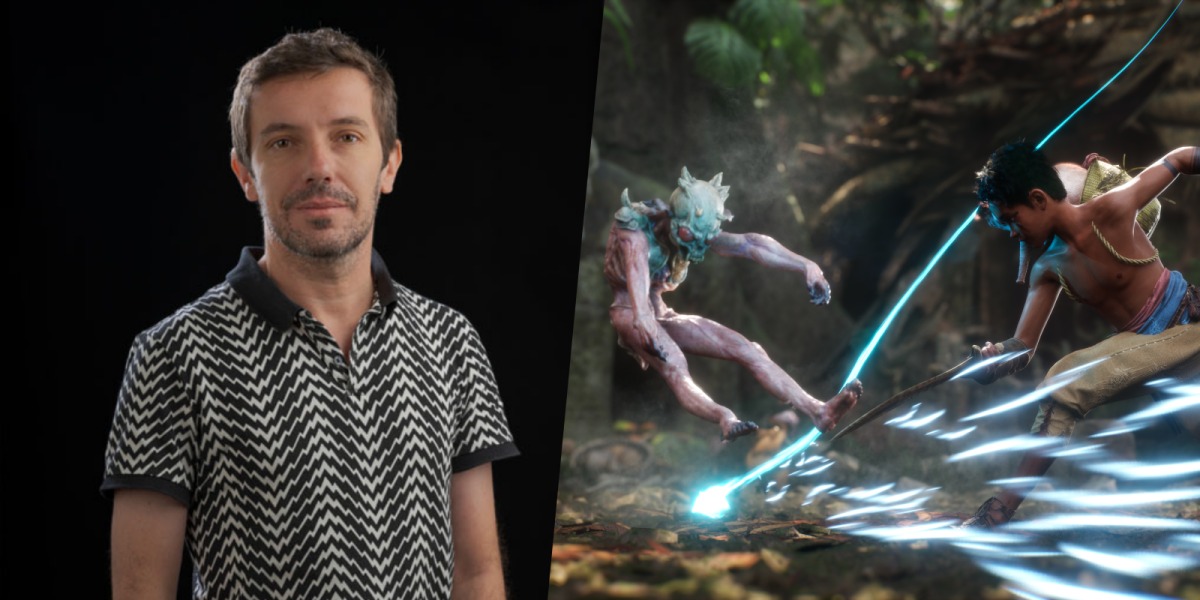
Your first big title, Hanno: A Magical Tale, is shaping up quite nicely. What inspired you to make it?
We were brainstorming different game ideas and had set a few requirements. Those included giving the player a companion, promoting good principles and values (such as loyalty and companionship) and using Portugal's rich history to add depth to the game.
We kept returning to the idea of a young boy and this historic elephant as the initial hook. We'd been inspired by The Elephant's Journey, a novel by the late Portuguese Literature Nobel prize winner José Saramago based on the story of a real elephant sent by the Portuguese King to Vienna (Austria) and also on the "real" Hanno, an albino elephant gifted by the Portuguese king to the Pope in 1514. Eventually, we decided to go all in.
In most of our work, our end goal has always been to create an emotional connection with the user. With Hanno: A Magical Tale, that continues to be our core focus. We want the player to see the elephant not just as a companion, but as a powerful protector and an emotionally engaging character they will genuinely care about.
As a relatively new studio, what are the biggest challenges you've faced?
"Building a game from an emerging country brings its own kind of pressure."
Building a game from an emerging country brings its own kind of pressure. There's a strong sense of purpose behind what we're doing - not just to finish and succeed but to prove what's possible from our corner of the world. That challenge has been our biggest test but also our greatest source of motivation.
We've also faced many of the same challenges that most indie studios face: limited resources, tight timelines and the constant pressure to turn ambition into something tangible.
You also began work on another title, The Kause. What can players expect?
The Kause is more of a scientific experiment on the thresholds and ceilings of interactive storytelling, focusing on realistic characters. Players are thrown into a psychedelic, oppressive world where they must lead a revolution against a dictator.
It will be a highly replayable experience that relies upon a custom-built narrative system we designed within Unreal Engine 5 based on two AI models. One helps the developers create a massive tree of dialogue options, while the other aligns these with character animations and lip-sync to allow for a wildly different narrative every time the game is played.
How has the support from eGamesLab impacted your journey?
"The support from the eGames Lab project allowed us to attend key industry events and showcase the emerging potential of local talent on a global stage."
One Way Eleven emerged from eGamesLab at just the right moment, allowing us to carry out essential research and development and to bring in untapped talent from various areas we lacked to kick-start the mission we had set for ourselves.
The support from the eGames Lab project allowed us to attend key industry events. For the first time in 2024, Portugal had its first institutional booth at GDC, which allowed us to connect with relevant and experienced professionals in the industry.
What are the biggest opportunities for the Portuguese game industry?
For starters, talent costs here can be up to 50% lower than in major tech hubs, while the country produces many graduates in relevant fields. Portugal also benefits from strategic access to Portuguese-speaking markets like Brazil and Angola, providing connections to over 260 million potential consumers.
Beyond the numbers, Portugal's rich cultural heritage and deep historical roots provide unique creative inspiration.
What strategies do you employ to attract and retain skilled professionals in Madeira?
Madeira is one of the most cost-effective places in Europe to work, but also a safe and vibrant place known for its beautiful landscapes. It is well-connected with flights to 65 destinations in Europe and the U.S. and high-speed networks that make remote and hybrid collaboration easy.
Madeira is one of those rare places where the quality of life often outweighs the constant pressure of chasing higher salaries, something that many creatives and developers increasingly value.
Where do you see things heading in the future?
The industry is going through a rough patch, but that doesn't mean it is stagnating. The number of players and buyers continues to grow, and the audience is larger, more diverse, and more engaged than ever.
That being said, teams should be as frugal as possible during this period, focusing on what truly matters to the consumer and fully utilising the latest technologies.
Read the original article on PocketGamer.biz.